April 3, 2025 Newsletter
In This Edition:
1. APS' AFTD Device Policy Makes National News
2. Community Corner: Ask Qs About EdTech Use at APS
3. David Zweig "An Abundance of Caution" Book Release
4. School Board Meeting Recap
5. Happening Soon
ICYMI: APS Makes National News for its Away for the Day Device Policy
Just today, Arlington Public Schools' Away for the Day device policy was profiled by CNN in an article titled 'It was so freeing': How a cell phone ban is changing life at a Virginia high school. The national news outlet focused on Wakefield High School's Yondr pouch program, interviewing Wakefield teachers and students about the program. The program's many successes are highlighted, including increased social engagement, reduced classroom distraction, and reduced stress for teachers, who no longer have to spend classroom time managing students' personal device usage.
Join the discussion on our Facebook page!
Community Corner: We Should Be Asking Questions About EdTech Use in APS
By Keena McAvoy and Liza Schalch
(Editor's Note: From time to time we publish op-eds, which are the unedited perspectives of APS parents, teachers, or community members on a topic of interest or concern to APS.)
When it comes to Educational Technology (Ed Tech), educators and parents urgently need to ask questions. This piece lays out several big ones, beginning with the most fundamental: WHY are schools using so many devices, apps, and platforms when the costs (social disengagement, screen addiction, worsening academic skills) are clear and the benefits are unproven?
IS IT EFFECTIVE?
Failed Promise - The Ed Tech industry promised big things – closing the achievement gap, differentiated learning, transformative classroom experiences – but this experiment has largely failed our children. Learning from skilled teachers and using old school materials (books, pencil and paper, manipulatives) offer better outcomes, comprehension, and retention than does screen-based learning.
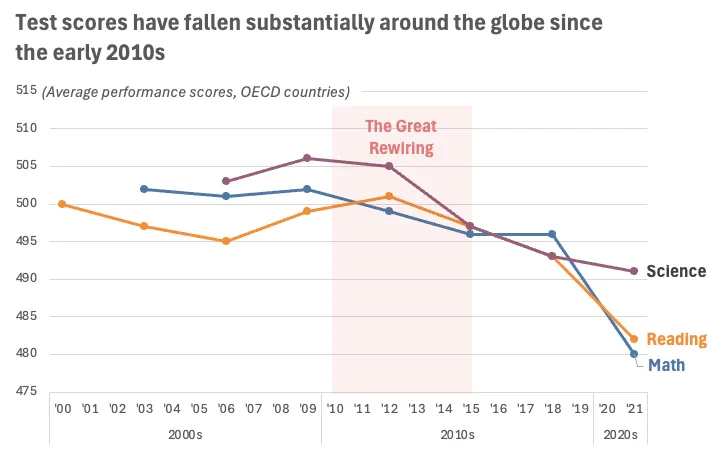
Scant and Sketchy Evidence - A 2023 UNESCO report states, “There’s little robust evidence on digital tech’s added value in education. Tech evolves faster than it is possible to evaluate it…a lot of evidence comes from those trying to sell it.”
Shallow Engagement - From the Ed Tech Law Center: “Instead of teaching uninterrupted focus and deep work, (the educational technology platform) scatters their attention across engagement-driven features designed to promote shallow but sustained interaction with the platform.” Maximum engagement, not student learning, is how educational technology companies make their money.
Time Terribly Spent - One study found that 38 out of every 60 minutes spent on student laptops are spent off-task.
Extrinsic Rewards vs. Intrinsic Motivation - Many of these apps/products “gamefy” learning and employ extrinsic rewards (e.g. tokens, badges, digital praise). “Perhaps the most dangerous result [of this practice] is that it often diminishes students’ intrinsic motivation to learn…Gamification also encourages kids to take the quickest route to the reward–which can come at the expense of actually learning the material” (Freed 115-116). It cheapens learning and subjugates students’ curiosity.
IS IT SAFE OR GOOD FOR CHILDREN?
Access to harmful content
Pornography - 41% of students ages 13-17 who participated in a Common Sense Media survey reported seeing pornography during the school day; 44% of these teens reported viewing pornography on school-owned devices.
YouTube and other algorithmically mediated apps provide exposure to violent and inappropriate content.
Experience blockers - Device use leads to decreased human interaction and decreased self selection of activities, both of which are linked to worsening sense of self and social and mental wellbeing.
Skill blockers - Students in a tech dominated education environment have greatly reduced opportunities to develop the most human and necessary skills. “Various soft (human) skills, such as critical thinking, creativity, communication, analytical skills, collaboration and relationship building, are often the ones most vital in digitalizing economies.” Current employers are telling us that new grads are often missing these skills.
IS IT LEGAL?
Consent Problems - Ongoing class action lawsuits are challenging the very legality of Ed Tech platforms – specifically their business models and their tendency to circumvent parental consent. In a case against PowerSchool, a judge recently sided with the plaintiffs, asserting that school systems CANNOT give consent on behalf of parents because consent must be both informed and voluntary.
Data Harvesting - Companies participate in algorithmic profiling of their users and sell that data; 96% of Ed Tech apps are selling data to third parties.
WHAT CAN APS PARENTS DO?
ASK: what devices or apps is my child using? Why? What are the terms of service?
ASK: how can I opt-out of device/EdTech usage for my child?
TALK/WRITE to your School Board member and express concerns around Ed Tech and device use.
SHARE: Report exposure to harmful content - pornography, violent imagery, etc..
ASK: Can my child leave his or her device at school?
IF APS DEVICE COMES HOMES: Supervised, limited use should take place in public places in home. NO (personal or school) DEVICES IN BEDROOMS.
WHAT CAN APS DO?
Discontinue 1:1 device policy (at least K-8).
Provide clear guidance to parents about device use and potential misuse.
Provide a clear list of apps and programs that children are using as part of their education. And tell them WHY.
RESOURCES:
After Babel (substack) - Jonathan Haidt, Phd
Ed Tech Exposed - Ed Tech Law Center - Andy Liddell, Julie Liddell
Internet Safety Labs
Screens and Learning Toolkit - Screen Time Action Network - Screen in Schools Workgroup
Teens and Pornography - Common Sense Media
UNESCO - Technology in Education
Unplug Ed Tech Toolkit - The Screentime Consultant - Emily Cherkin
BOOKS:
An EdTech Tragedy? Mark West, UNESCO
The Anxious Generation - Jonathan Haidt, PhD
Better Than Real Life - Richard Free, PhD
Screen Schooled - Matt Miles, Joe Clements (Fairfax County teachers!!)
Keena McAvoy and Liza Schalch are the co-founders of DMV Unplugged, an organization promoting collective action and policy change to liberate DC-area children from the harms of phone- and technology-based childhoods. Learn more and get free resources at https://www.dmvunplugged.org/.
David Zweig's An Abundance of Caution:
Pre-Order Now & Join the DC Book Event!
David Zweig’s new book, An Abundance of Caution, drops on April 22—andArlington has an important cameo in it.
The book digs into the devastating school closures during the pandemic and the policy failures that led to them. Zweig lays out exactly what happened, pushing back against the idea that “we just didn’t know.”
Join us at David’s DC Book Event!
When: Friday, May 2, 6pm - 8pm
Where: The Big Board, 421 H St NE, Washington, DC 20002
Tickets available here. If you order your ticket soon it will be eligible for a free book!
Pre-Order the Book Here
Why This Book Matters
Remember when Arlington schools were closed for over a year, even as kids in Europe, private schools, and many other states were back in the classroom? Arlington leadership claimed their decisions were “following the science.” But An Abundance of Caution lays out what actually happened—how political pressure and flawed thinking kept our schools closed far longer than necessary, at great cost to our kids.
This book is essential reading for parents who fought to reopen schools, for those who want to understand how it all went wrong, and for anyone who refuses to let this history be rewritten. Order your copy and join us on May 2!
About the Author:
David Zweig is an author, journalist and investigative reporter. His work has appeared in top publications, including The New York Times, The Wall Street Journal, The Atlantic, New York Magazine, Wired, The Free Press, the Boston Globe, and, most often his newsletter, Silent Lunch. He has testified twice before Congress as an expert witness on American schools during the pandemic, and his investigative reporting on the pandemic has been cited in numerous Congressional letters and a brief to the Supreme Court.
Join the discussion on our Facebook page!
March 27th School Board Meeting Recap
Highlights from the March 27th School Board Meeting include:
The Math Office presented its annual Math Monitoring Report, which included recent Measures of Academic Progress (MAP) data on math achievement and growth and provided updates from Math Coaches and Interventionists on instructional practices.
Fewer APS students are making expected growth this year compared to last year but the share of students in the lowest achievement category has shrunk.
An HR Audit was initiated due to management concerns about payroll processing and overtime compensation. Key Findings include:
Lack of Accountability for Overtime Records
Lack of Standard Operating Procedures (SOPs)
Lack of Compliance with Overtime Pay Regulations for Exempt Employees
Overtime Overpayments totaling $12,230.53 were identified and reimbursed
Challenges with identifying the sources of overtime expenses in certain departments’ budgets
Lack of Overtime Assignment Guidelines
Read the full recap here.
Happening Soon
Thursday, April 3, 3:45 - 5:15 PM Budget Work Session #3. School Board Work Session. Syphax Education Center, 2110 Washington Blvd. Watch live.
Thursday, April 3, 7:00-9:00 PM Public Hearing on Proposed FY 2026 Budget.Syphax Education Center, 2110 Washington Blvd. Watch live.
Monday, April 7, 5:30-7:30 PM Open Office Hours with Kathleen Clark, In-Person at Westover Library. Sign up to speak after 3:00 PM April 4th.
Thursday, April 10, 7 PM School Board Meeting, Syphax. Sign up to speak at public comment between Friday, April 4, and Tuesday, April 8 at 4 PM.
Tuesday, April 22, 6-8 PM Open Office Hours with Miranda Turner, In-Person at Syphax. Sign up to speak after 3:00 PM April 18th.